PARTICLE+WAVE 2026 Exhibition
This year’s Particle + Wave exhibition showcases the incredible range of technological possibilities in contemporary media art, highlighting both the tools and the conceptual frameworks that shape the field today.
Together, these works reveal how media art continues to evolve, embracing new technologies, experimental processes, and participatory frameworks to expand the ways we perceive, experience, and reflect on the world.
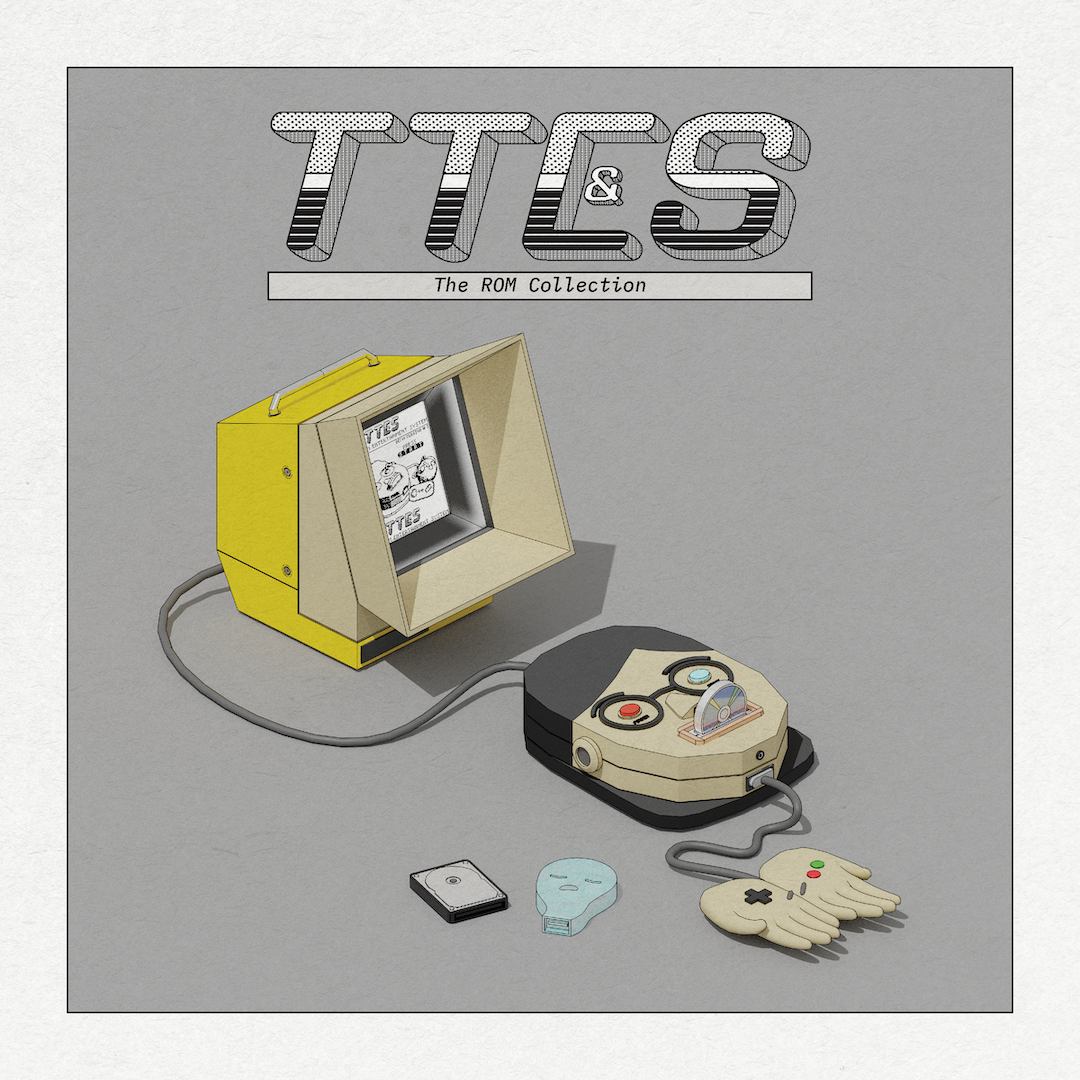
TTES: The ROM Collection by Teresa Tam (BFA '14, Media and Technologies)
“TTES: The ROM Collection” is the first iteration of a newly developing project, “TTES”, that utilizes DIY and hacker tools to repurpose current and retro technology to explore bootlegging and counterfeiting as a form of cultural transference and memory preservation. For “The ROM Collection”, I will be using Gameboy (DMG/Color/Advance) hardware and open-source development tools to create cartridges that thematically explore “read-only memories”, specifically in relation to ancestral memories that I can only access but never fully understand. Just as bootleg DVDs gave me access to foreign films, these films were contextually incomplete due to questionable translations and a lack of cultural understanding of the themes being explored. Despite this, I treasured these DVDs as they gave me insight into people and places that I wouldn’t have been able to, even if it meant only by looking. While it’s easier to access all kinds of media around the world today compared to 20 years ago, much of what we can get here is still filtered based on global appeal. Torrented, pirated, and bootlegged media is still the primary way to reach what is hidden behind censorship, lack of large corporate investment, and the perceived sense that it’s meant only for local consumption.
While video game technology is being used for this project, the contents in each cartridge might not be considered games in a traditional sense, in that no inherent goals or points are being tallied. Instead, the technology is being used as a container and sets of limitations to develop the main theme. The Gameboy uses 8-bit images and audio, which necessitates emphasizing essential qualities of implied and suggested shapes rather than showing outright what it’s supposed to be. In “The ROM Collection”, each cartridge would function more like a storage unit, like a playable hard drive or music player.
S4M4R3S by aenl (Anna Eyler and Nicolas Lapointe)
S4M4R3S is an installation composed of two distinct objects, hinting at an evolution of space over time. A horizontal screen, like a rearview mirror, is placed against a blue-painted wall. On this screen, a pixelated landscape created with Blender unfolds over a precise duration of 12 hours, showing plains from sunrise to sunset. This extended cycle invites prolonged contemplation, where the nuances of light and the subtle transformations of the landscape are revealed pixel by pixel, transforming the screen into a window onto stretched time.
But the central element of the exhibition is, without question, the thermal printer suspended from the ceiling. Once a day, at a random moment between 9 a.m. and 6 p.m., it activates to release a print: a stylized maple seed in BMP format. Commonly called a “helicopter” because of its shape and graceful spiral descent, this white-paper samara unveils to the ground, creating a weighty sense of anticipation, since the instant of printing cannot be predicted or influenced—only its consequences can be observed. It invites a patience rarely solicited in our daily interactions with technology.
Day after day, these prints accumulate on the floor, forming an increasingly dense cascade of paper, evoking the progressive materialization of time. Meanwhile, the digital landscape repeats tirelessly, marking the passage of days. As observers, we realize that the work distances itself from any pursuit of spectacle, instead favoring a discreet poetics of temporality. Slow, cyclical, and patient, it operates at the margins of usual exhibition frameworks, prompting a reevaluation of our perception of rhythm and artistic evolution.
Through S4M4R3S, aenl offers a reflection on our complex relationships with time, the imperceptible, and the often illusory promises of technological progress. The installation thus engages a fascinating dialogue between the potential of a repeated gesture and its material manifestation, deferred into the present, inviting us to a personal introspection in the face of the silent dance of time.
(written by Candice Dan)