
Bachelor of Creative Industries (BCI)
Credit: Carter Orcherton & Mindy Dawn Brass, Burger Punk Art Show. Photo: Katy Whitt
A degree at the intersection of art and industry.
Spend four years developing your creative practice, entrepreneurial thinking and industry awareness alongside internationally recognized artists, designers and educators.
What is a Bachelor of Creative Industries?
| Degree Type | Major | Credits | Duration | Format |
|---|---|---|---|---|
| Undergraduate | Applied Creative Industries | 120 | 4 years, Full-time | In-person, studio |
An AUArts' Bachelor of Creative Industries is more than a degree—it's your launchpad for building ideas, opportunities and creative work that moves beyond the studio and into the world.
As a BCI student you will:
- Build a multidisciplinary creative practice across art, design, media and technology.
- Develop entrepreneurial, project management and industry-ready skills.
- Create and communicate ideas across digital, physical and hybrid platforms.
- Explore storytelling, production and content creation across formats and audiences.
- Analyze creative work through cultural, social and ethical perspectives.
- Collaborate across disciplines and apply your work to real-world contexts.
- Graduate with a portfolio that reflects both creative practice and professional readiness.
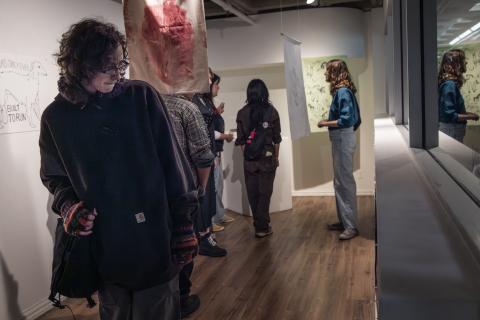
Why study creative industries at AUArts?
- Unique in Western Canada: AUArts is the only post-secondary in western Canada to offer a four-year BCI undergraduate degree anchored in multidisciplinary studio-based learning.
- Studio-based learning, industry-focused skills: Work across art studios and digital labs, building the creative, critical and technical skills needed to thrive in evolving creative industries.
- Small classes, big mentorship: With an average of just 18 students per class, you'll get personalized feedback and guidance from faculty who are active artists, creators and industry professionals.
- Multidisciplinary freedom: Follow your ideas wherever they lead. Combine studio practice with courses in storytelling, media, theory, entrepreneurship and creative industries—building a flexible skillset that adapts to your goals.
- Real-world experience: Take your work beyond the studio. Pitch ideas, collaborate across disciplines and gain hands-on experience through projects, partnerships and work-integrated placements that connect you directly to industry partners.
- Innovate, collaborate, navigate: Work with a community of like-minded peers to develop inventive solutions to real-world challenges. Share ideas, exchange perspectives and build the soft skills needed in evolving creative fields.
Careers in Creative Industries
Graduates of the BCI program will be prepared to take on roles in digital and media production, brand and marketing strategy, creative entrepreneurship, design and innovation strategy, arts and culture industry leadership and more.
Potential Fields and careers may include:
- Cross-Platform Content Creator
- Social Media Strategist
- Design Strategist
- Creative Director
- Art Director
- Digital Strategy Consultant
- Media Production Manager
- Brand Strategist
- Production Manager
- Producer
- Arts Administrator
- Curator
- Entrepreneur

What to expect in your first year.
In your first year, you'll explore a range of artistic mediums and build your creative foundation, while developing skills in digital storytelling, interactive media, creative production, and arts management through critical studies and industry-focused courses.
Understanding artistic requirements.
While the Bachelor of Creative Industries does not require a portfolio assessment for admission, studio art courses are requirements of the program.
Students should be comfortable with the thought process, experimentation, and research involved in art-making, and be confident in their ability to demonstrate creativity and originality across varied materials.
BCI applicants are advised to review the portfolio requirements for the BFA and BDes or book an appointment for a one on one portfolio review if you are uncertain about the level of artistic ability required to succeed in the BCI program.
What's next?
Artistic abilities
Understand the artistic expectations of this program by reviewing the portfolio requirements for other degree programs.
Portfolio requirementsContact us
Do you have any questions about our programs or the application process? We're here to help!
Connect with our recruitment teamBCI Applied Creative Industries - First Year Overview
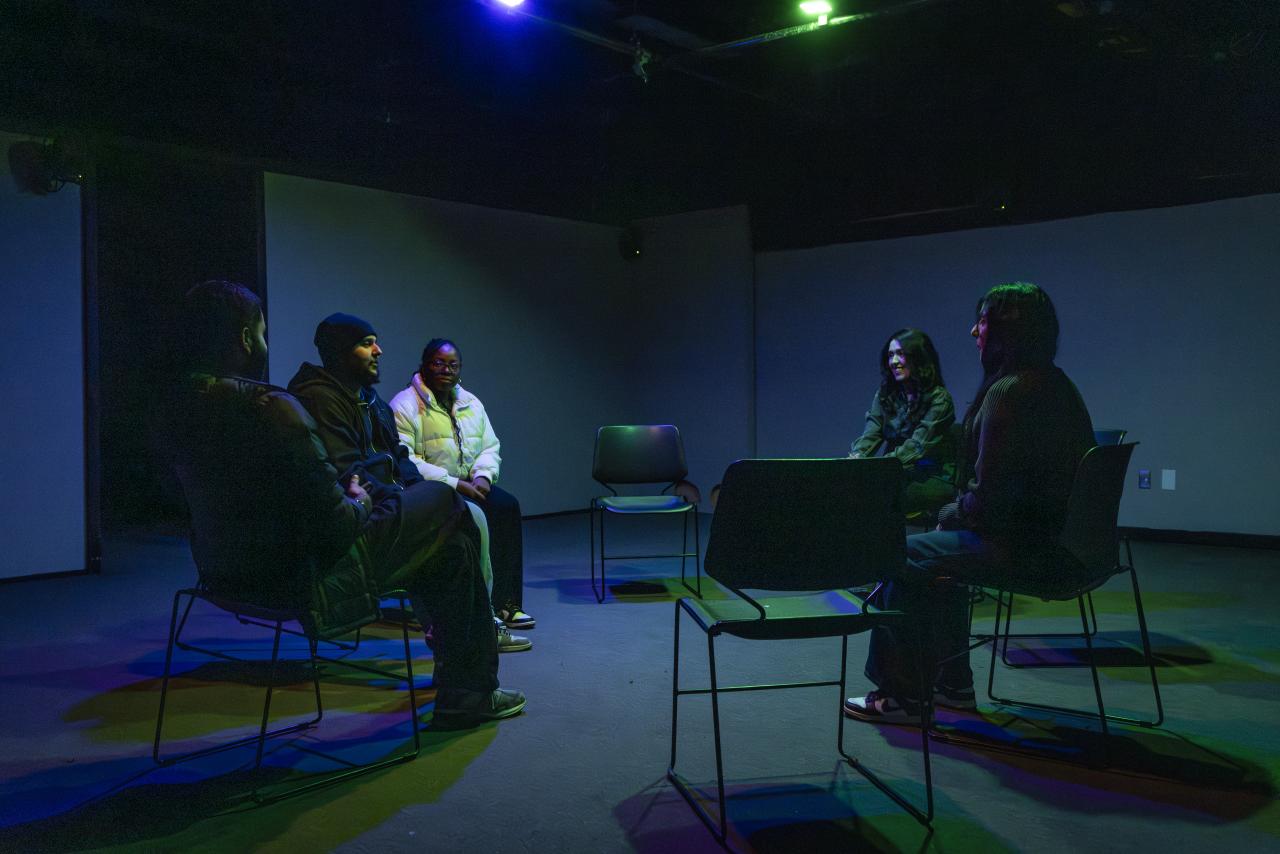
Foundational Creative Industries (required) | |
| CRIN 101: Introduction to Creative Industries (3) | Explore the evolving landscape of the creative industries, from concepts like intellectual property, digital transformation, business models, and cultural policy. Through case studies and practical assignments, build a foundational understanding of the creative economy and its impact on society. | CRIN 102: Introduction to Digital Media Practices (3) | Learn the technologies and tools used to create digital stories, and apply them through hands-on, collaborative projects. Explore time-based storytelling across creative media like video, animation, e-literature, creative coding, and game design. |
| CRIN 103: Visual Rhetoric (3) | Develop your ability to communicate ideas, stories, mood, and emotion through visual storytelling using static and sequential images. Shift away from technical drawing skills to focus on storytelling through visuals like collage, photography, clipart, and simple image creation. Analyze films, storyboards, comics and animation to become familiar with cinematic techniques and terminology. | |
Art History (required) | |
| AHIS 100: Themes in Modern and Contemporary Art and Visual Cultures 1789–Present (3) | Introduces ways of thinking about modern and contemporary art, craft, and design through visual and material artefacts, practices, and discourses, considered in their historical contexts from contemporary perspectives as conveyors of cultural values and meanings. | AHIS 101: Themes in Pre-Modern Art and Visual Cultures: Before 1789 (3) | Examines pre-modern art, craft, and design through visual and material artefacts, practices, and discourses, emphasizing thematic and conceptual comparisons across historical and contemporary cultures, and introducing art historical methods including formal, social, and gender-based analysis. |
Critical & Creative Studies (required) | |
| CCST 100: Introduction to Critical and Creative Studies (3) | Provides an introduction to critical and creative reasoning by developing skills to assess assumptions and generate imaginative ideas, using lectures, seminars, and events to explore issues such as eco-cultures, post-colonial imaginaries, social justice, art and science, post-humanism, nationalism, and globalism. | ENGL 100: Writing for Critical and Creative Practices (3) | Introduces fundamentals of writing and composition with emphasis on clear, organized expression across genres relevant to creative professions, including expository prose that engages with research materials and reviews or analyzes art and design events at and beyond AUArts. |
Studio Foundation Electives (choose any three of the listed courses): | |
| ANIM 101: Introduction to Animation (3) | Introduces basics of animated motion through short, character-driven projects, with emphasis on research, observation, drawing, and application to create emotional communication in short personal narratives. | CRMC 101: Ceramics (3) | Explore ceramics through 3D fundamentals—form, space, texture, and colour—via hand building, wheel throwing, mold making, casting, clay and glaze technology, and experimental approaches, alongside lectures, demos, field trips, and critiques that connect practice to historical and contemporary theory. |
| DRWF 110: Drawing I (3) | An introduction to observational drawing covering representational and abstract methods, with focus on line, tonal value, pictorial space, perspective, human figure, and personal content, delivered through studio projects, critiques, and independent work. | DRWF 120: Drawing II (3) | Builds on Drawing I by expanding traditional drawing through diverse strategies that explore narrative structures, photography, the body, perceptual processes, and cultural contexts, with research and experimentation central to developing individual approaches. |
| FBRE 101: Fibre-2D (3) | Explores two-dimensional fibre arts through colour, texture, pattern, composition, and content using techniques such as weaving, felt, papermaking, printing, dyeing, embroidery, and mixed media, supported by projects, lectures, and critiques. | FBRE 102: Fibre 3D (3) | Investigate contemporary fibre arts through form, colour, movement, and texture while working with techniques such as soft sculpture, felt making, woven construction, wearable art, paper casting, book arts, and mixed media, supported by hands-on projects, lectures, and critiques. |
| GLSS 101: Glass Casting (3) | Learn mold-making and casting within contemporary glass practice, experimenting with forms through waste, refractory, two-part, and flexible molds using materials like glass, wax, clay, plaster, concrete, and ice, while exploring abstraction, modular construction, and historical/contemporary glass contexts. | GLSS 102: Hot Glass (3) | Experience hot glass studio practice through forming and shaping molten glass, exploring fundamental 3D design principles in relation to other media, and situating projects within historical, contemporary, and interdisciplinary art, craft, and design perspectives. |
| JWLM 101: Introduction to Jewellery and Metals (3) | An introduction to jewellery and small metals focused on 3D design, fabrication skills, and contemporary ornamentation, using diverse materials and processes while exploring the relationship between material and meaning through drawings, statements, and wearable creations. | MADT 101: Exploring Media Culture (3) | Introduces the role of media and digital technologies in contemporary culture, developing basic digital skills and applications of video, audio, motion graphics, and electronics through short workshop modules. |
| OBDF 110: Object Design and Fabrication (3) | Gain a foundation in object design by combining theory with hands-on projects in CAD, 3D modeling, and digital fabrication; explore rapid prototyping, computer-aided manufacturing, and the contextual connections between art, craft, design, and technology. | PHTG 101: Introduction to Photography (3) | Covers camera operation, photographic seeing, digital workflow, and printing, introducing techniques, concepts, and genres of photography through creative projects; students are responsible for printing, film, and processing costs, using cameras with manual controls. |
| PNTG 101: Painting (3) | Introduces contemporary painting through materials and processes including acrylic, oil, collage, and mixed media, with readings, a research project, and critiques examining contemporary and historical imagery. | PRNT 101: Print through Drawing (3) | Explores printmaking techniques that expand drawing practices, discovering unique mark-making possibilities and producing small editions of prints using presses. |
| PRNT 104: Pixels and Print (3) | Explore the intersection of digital imagery, hand-drawn work, and alternative photographic printmaking techniques such as photo manipulation, transparencies, and experimental processes, supported by technical demos, lectures, critiques, and critical discussion of outcomes. | SCLP 101: Sculpture (3) | Engage with additive, reductive, constructive, and reproductive sculptural processes in clay, plaster, wood, metal, found objects, and electronic media, exploring space and concept development through directed projects and independent study. |
